Technology Initiatives and the Role They Play in Preserving and Increasing Business Value

2020 was the year the world changed. Paradigms shifted, long standing assumptions were overturned. Business plans were disrupted, and competitive positions were realigned.

New Environment, New Challenges

Businesses were heavily impacted by change. Some were advantaged, others disadvantaged by the disruption. For example, a company with technology to facilitate staff working remotely is better positioned than a company with staff tied to the office. No matter, each is faced with the challenge to evaluate opportunities and threats and take steps to preserve and create value in this new environment.

Mining for Value with Technology

Accelerating digital transformation is a strategy many businesses are taking to build and safeguard value. Changing demands from customers, the work force and all participants in the supply chain are driving investment in and adoption of technology. Advances in technology tools, capabilities, and processes are fueling digital transformation. The pace of technology development is ironically demonstrated in the negative where microchip scarcity is shutting down production of mid-level vehicles to feed the chip requirements of higher profit, top-of-line cars.

Gartner forecasts the overall, worldwide IT spend for 2021 to increase 8.4%, rebounding from a 2.2% decline in 2020. Much of the increase will reflect the adoption of cloud and other (X)aaS technologies. The proliferation of data and investment in analytic tools, artificial intelligence and machine learning will allow businesses to derive actionable information from raw data, gain competitive advantage and increase their value.

The use of these technologies will change from the tactical, IT supporting business processes to the strategic technology as core components of the enterprise. Data will become a value bearing asset.

The Strategic Value of Cybersecurity

Digital assets are not the only source of increased value for an enterprise. Technology and globalization have created an exposure that is an existential threat to businesses of all sizes. Attacks have become daily events as major companies, institutions and municipalities are targets of cybercrime and disruption. Ransomware, phishing in all its forms and similar attacks drain billions from businesses each year. Another class of attack threatens the basis of our societies’ undermining principals of democracy, clouding many aspects of our lives with misinformation, conspiracy theories, “alternative facts”. etc.

In this environment businesses that can build a robust cybersecurity defense increase their value and safeguard their future. Much like the technologies used to leverage data, cybersecurity needs to become a core component of the business, incorporated into all areas and activities. The value of strategic cybersecurity is the responsibility of everyone who comes in contact with the enterprise. Planning and implementing an architecture of cybersecurity will take into account customers (future and active) and all points on the supply chain (not just vendors but all providers of professional services). All staff should know that cybersecurity is valued as a key asset of the organization and the role that plays in the work they perform. All leadership in the organization should provide example of their understanding of, and adherence to, cybersecurity practices. The higher the leadership the more clearly demonstrated the commitment to cybersecurity.

Strengthen and Increase Resilience

PricewaterhouseCoopers (PwC) conducted their Global State of Information Security Survey (GSISS) for 2021 last summer. They surveyed 3,249 C-level executives, worldwide, across a range of industry sectors. The survey confirms that cybersecurity is no longer the sole purview of the IT department. “Although tech is very much in the picture—security leaders are working closely with business teams to strengthen and increase the resilience of the organization as a whole.” 50% of responders say that cyber and privacy will be baked into every business decision and plan”, up from 25% in the previous year’s survey. “Fifty-five percent of executives plan to increase their cybersecurity budgets, with 51% adding full-time cyber staff in 2021 — even as most executives (64%) expect business revenues to decline.”

With businesses, in their entirety, embracing the need for cybersecurity. executives want increased testing across a wide range of scenarios so they can anticipate attacks, plan, and take steps to ensure their critical business function will stay up and running. “It is not possible to forecast the future, but it is possible to plan to address imaginable scenarios.” Disinformation attacks and threats sponsored by nation states are among the scenarios identified as concerns in the survey.

Cyber Assets Future Proof the Business

This cyber threat environment demonstrates the real value businesses can create by developing a broad and deep cyberdefense strategy encompassing all areas of the enterprise. Such a strategy represents a lasting asset, safeguarding the future of the business. This is value, equally as important as intellectual property, new products, research and development, and a loyal customer base.

Develop a Cyber Secure Architecture but Don’t Ignore Infrastructure and Technical Debt

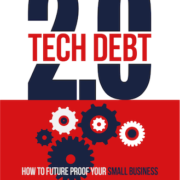
New technologies can increase the value of a business, but it is important to not overlook the infrastructure that supports the business. Obsolescence of hardware or software generates vulnerability and can undermine the efforts and progress made to create a new class of assets. Servicing tech debt by strategic updating, maintenance, and retirement of systems and equipment that is out of date is an essential part of preserving value. Strategies for recognizing and managing tech debt are covered in the book, “Tech Debt 2.0®, How to Future Proof Your Business and Increase Your Tech Bottom Line”, published by the IT Ally Institute in April 2020.

Value for the Future

Investors understand that the value of a business is based on its ability to thrive and deliver returns in the future. Preparing a business for the future in today’s environment depends on assets that promote speed, flexibility and resilience. Emerging technologies can prepare a business to meet future challenges and safeguard against evolving threats.

Michael Fillios is the founder and CEO of IT Ally Holdings, a diversified holding company that provides IT and Cyber advice and consulting to family owned and private equity backed small and medium size businesses (SMBs) and Credit Unions. As a former Fortune 500 global CIO, small business CFO, technology entrepreneur and management consultant with more than 25 years of experience, he is responsible for driving the strategic vision and growth of the IT Ally Holdings companies including IT Ally, CU Ally, fraXtion and the IT Ally Institute.

This article was originally published on Architecture and Governance.

Increase Business Value With IT Investments.

Preserve and Increase Business Value With IT Investments

2020 was the year the world changed. Paradigms shifted, long standing assumptions were overturned. Business plans were disrupted, and competitive positions were realigned.

New Environment, New Challenges:

Small and Mid-Size Businesses of SMBs were heavily impacted by change. Some were advantaged, others disadvantaged by the disruption. For example, a company with technology to facilitate staff working remotely is better positioned than a company with staff tied to the office. No matter, each is faced with the challenge to evaluate opportunities and threats and take steps to preserve and create value in this new environment.

Mining for Value with Technology:

Accelerating digital transformation is a strategy many businesses are taking to build and safeguard value. Changing demands from customers, the work force and all participants in the supply chain are driving investment in and adoption of technology. Advances in technology tools, capabilities, and processes are fueling digital transformation. The pace of technology development is ironically demonstrated in the negative where microchip scarcity is shutting down production of mid-level vehicles to feed the chip requirements of higher profit, top-of-line cars.

Gartner forecasts the overall, worldwide IT spend for 2021 to increase 8.4%, rebounding from a 2.2% decline in 2020. Much of the increase will reflect the adoption of cloud and other (X)aaS technologies. The proliferation of data and investment in analytic tools, artificial intelligence and machine learning will allow businesses to derive actionable information from raw date, gain competitive advantage and increase their value.

Asset Creation:

The use of these technologies will change from the tactical, IT supporting business processes to the strategic, technology as core components of the enterprise. Data will become a value bearing asset.

Benefit for the Business and Private Equity Firm owners:

SMB owners and stakeholders will benefit from improved processes, and operational efficiencies. The benefit of increased value will also accrue to private equity firms with opportunities on two axes. The data assets of their portfolio companies will present new opportunities for market creation, synergies, and efficiencies. Also, the acquisition landscape will be enriched as potential targets build and demonstrate value that can be magnified as part of the private equity portfolio.

Create Value but don’t Ignore Infrastructure and Tech Debt:

New technologies can increase the value of a business, but it is important to not overlook the infrastructure that supports the business. Obsolescence of hardware or software can undermine the efforts and progress made to create a new class of assets. Servicing tech debt by strategic updating, maintenance, and retirement of systems and equipment that is out of date is an essential part of preserving value. Strategies for recognizing and managing tech debt are covered in the book Tech Debt 2.0®, How to Future your small business and increase your tech bottom line, published by the IT Ally Institute in April 2020.

The Value of Cybersecurity:

Digital assets are not the only source of increased value for an enterprise. Technology and globalization have created an exposure that is an existential threat to businesses of all sizes. SMBs are not immune to attacks that have become daily events as major companies, institutions and municipalities are targets of cybercrime and disruption. Ransomware, phishing in all its forms and similar attacks drain billions from businesses each year. Another class of attack threatens the basis of our societies’ undermining principals of democracy, clouding many aspects of our lives with misinformation, conspiracy theories, “alternative facts”. etc.

In this environment businesses that can build a robust cybersecurity defense increase their value and safeguard their future. Much like the technologies used to leverage data, cybersecurity needs to become a core component of the business, incorporated into all areas and activities.

Strengthen and Increase Resilience:

PricewaterhouseCoopers (PwC) conducted their Global State of Information Security Survey (GSISS) for 2021 last summer. They surveyed 3,249 C-level executives, worldwide, across a range of industry sectors. The survey confirms that cybersecurity is no longer the sole purview of the IT department. “Although tech is very much in the picture—security leaders are working closely with business teams to strengthen and increase the resilience of the organization as a whole.” 50% of responders say that cyber and privacy will be baked into every business decision and plan”, up from 25% in the previous years survey. “Fifty-five percent of executives plan to increase their cybersecurity budgets, with 51% adding full-time cyber staff in 2021 — even as most executives (64%) expect business revenues to decline.”

With businesses, in their entirety, embracing the need for cybersecurity. executives want increased testing across a wide range of scenarios so they can anticipate attacks, plan and take steps to ensure their critical business function will stay up and running. “It is not possible to forecast the future, but it is possible to plan” to address imaginable scenarios. Disinformation attacks and threats sponsored by nation states are among the scenarios identified as concerns in the survey.

Cyber Assets Future Proof the Business:

This cyber threat environment demonstrates the real value businesses can create by developing a broad and deep cyber defense strategy encompassing all areas of the enterprise. Such a strategy represents a lasting asset, safeguarding the future of the business. This is value, equally as important as intellectual property, new products, research and development, and a loyal customer base.

security portfolio

Higher Stakes for PE Portfolios:

Private Equity firms face the same cyber threats as individual businesses. Actually, the stakes are higher with PE firms protecting their investors from vulnerabilities that can spring from anywhere in the portfolio of companies. Cybersecurity is only as strong as the weakest link in the portfolio, and then the next weakest, then the next weakest link, and so on.

Momentum Cyber is the premier advisor to the cybersecurity industry and has recently published the “Cybersecurity Almanac for 2021 The report states that PE firms continue to show a strong interest in cybersecurity fueled by the acceleration in digital transformation and the increased vulnerability. PE firms were responsible for 37% of the M&A activity in the cybersecurity sector last year and a 28% (YoY) increase in cybersecurity investment. Private Equity professionals are securing their investments with the same strategic thinking utilized in portfolio planning and acquisitions.PE firms are taking a portfolio-wide approach to managing cybersecurity, benefiting from efficiency and cost-savings, and gaining insight to the security health of their portfolio.

Boosting Portfolio Value:

A portfolio approach to security creates value that is greater than the sum of the security assets of the businesses that make up the portfolio. Firms adopt, portfolio-wide cybersecurity standards. This creates a cybersecurity strategy that aligns with the risk tolerance characteristics of the PE firm rather than the individual portfolio members.
A high threshold of cybersecurity readiness for joining the firm preserves the value of the firm’s security asset.

In addition to shared policies and standards, multiple businesses in a portfolio bring the benefit of multiple eyes and minds to bear on monitoring security as each organization has its own unique sensitivities. A robust council of security resources can boost investor confidence.

Value for the Future:

Investors understand that the value of a business is based on its ability to thrive and deliver returns in the future. Preparing a business for the future in today’s environment depends on assets that promote speed, flexibility and resilience. Emerging technologies can prepare a business to meet future challenges and safeguard against evolving threats.

About the Author

Michael Fillios is the founder and CEO of IT Ally Holdings, a diversified holding company that provides IT and Cyber advice and consulting to family owned and private equity backed small and medium size businesses (SMBs) and Credit Unions. As a former Fortune 500 global CIO, small business CFO, technology entrepreneur and management consultant with more than 25 years of experience, he is responsible for driving the strategic vision and growth of the IT Ally Holdings companies including IT Ally, CU Ally, fraXtion and the IT Ally Institute. His first book, Tech Debt 2.0®: How to Future Proof Your Small Business and Improve Your Tech Bottom Line, was published by the IT Ally Institute in April, 2020.

[This article was originally published on itallyllc.com.]

The Ultimate Future Proofing: Open-Heart Surgery

Open-heart surgery prepped my SMB for the ultimate future proofing.

As a young executive, I received some sage advice from a career coach when discussing the topic of “work life balance.” The advice was simple, but the impact was significant and lifted a burden I was carrying for quite some time. My coach said, “don’t try to come up with a magic formula that allocates a percent to the time you allocate to work, family and yourself, but rather put 100% focus into anything that you do.” In other words, be fully present and commit to those areas individually and you will never feel the burden of work / life balance ever again. He was right!

The Mindset

This gave me a unique perspective and more importantly a mindset that I have applied ever since. This mindset was recently tested when I decided to become an entrepreneur again when I launched IT Ally in 2017. My first tour was 10 years during the 2000’s when I was Chief Solutions Officer at BTM Corporation. So as the saying goes, this was not my first rodeo. As my fellow entrepreneurs know, in the early stages of a starting your business, 100% of your success fully depends on the actions of the entrepreneur. You never feel you are doing enough, there is always more you want to accomplish, and it can never happen fast enough.

However, one additional shift in this case from my role as a Fortune 500 CIO, was on the personal side. Yes, I always worked hard regardless of the job or role I had, but as an entrepreneur, I knew exactly what it is was going to take, the sacrifices I needed to make and how that increased time would impact my work / life balance. With my career coach’s advice in mind, I made sure to apply the 100% percent formula. Being an entrepreneur, outside the structure of the corporate world, there was another dynamic – that is, there truly isn’t a bright line defining what is business versus personal time. My fellow entrepreneurs know this all too well – that line is never clear and tends to shift continuously. In fact, in my experience, it is in most cases nonexistent.

Open-Heart Surgery

In early January 2021, this struggle to define and separate business and personal was “big-time” tested when I learned that I needed to undergo open heart surgery to correct a known defect that afflicts about 1% of the population. The realization hit me when my cardiologist strongly recommended, I address this issue right away, when in my mind, I had about another ten years! Coming off of a record-setting 2020 for IT Ally Holdings and our operating companies, navigating the pandemic and the usual entrepreneurial stresses in an early-stage company, I worried about the impact this would have on my business, my personal life, my health, and my family. I also knew that I would need to apply a different plan and playbook to navigate this process, especially with a relatively compressed timeline of about two weeks before my surgery. I could not, for example, just go out on short term disability and let my corporate HR and benefits take care of the rest. So, let’s just say, we had more questions than answers in terms of getting prepared, not to mention major surgery that was looming!

Needless to say, I treated this situation like many others that I have done before, and became hyper focused on detailed planning and flawless execution at least for the pieces in my control. Oh did I mention, that I managed to schedule my surgery at the top cardiac hospital in the country, the Cleveland Clinic, so I knew that I would be in great hands for my procedure.

Personal Affairs

Although my surgery went as planned and I am in midst of my recovery process now, I wanted to share some of my experiences and lessons learned from a business and personal perspective that might be relevant to other entrepreneurs and business owners and in my case as a husband, father and grandfather, which again reinforced the blurred lines that exist from what is a business versus personal situation.

Getting your personal affairs in order. Having surgery thrust upon us so quickly, it was a great opportunity for my wife and me to update our legal and business documents such as wills, trusts, beneficiaries, insurance coverage, health care proxies, banking and investment portfolio. Having three kids over the age of 18, also meant that our conversations with them would need to be thoughtful and detailed, but hopefully without creating any major sense of panic. Fortunately, we had many of these documents in place, but our personal /business circumstances had changed since their creation and therefore required some significant updating and alignment with my newly formed businesses and financial situation.

Business Affairs

Getting your business affairs in order. Having created and launched 4 operating businesses and a holding company since 2017, it was important to revisit all operating agreements with our corporate attorney. We basically wanted to ensure that these agreements reflected our current ownership structure and aligned with the trust we established to ensure the assets were protected, estate taxes were mitigated and that the business had a clear path forward should I no longer be able to operate it. Although I had these conversations in my mind a thousand times, the process this time around was much more real and, in some cases, required difficult decisions to be made, but once addressed, felt like a major burden was lifted. Not to mention, I knew that my family and my business would be protected and we had a plan to operate from should the worst scenario play out.

Communicate

Communicate, communicate, communicate. We knew that we needed to communicate my situation, but wanted to be thoughtful and deliberate in terms of our message and timing for when and who to deliver it to. Like many transformational or significant projects that we assist our clients with, we needed a plan to manage this process and the various business and personal communications. As we contemplated the plan, it turned out to be a fairly comprehensive list that included my team, current and potential new clients, partners, children, family members, and close friends. Armed with this list, we defined, sequenced and executed a communications plan within the two week window and got the job done.

Trust

Trust your team, trust the process. Since the formation of IT Ally in 2017, I always viewed this as a scalable business rather than one that was centered just around me. Because of this strategy, I created a business and operating model to achieve this vision. In fact, one of our first podcasts, Inside the IT Ally Business Model, explained more about this.

Having to leave the “business office” for this surgery and with a lengthy and somewhat uncertain recovery period to follow, I was able to test or perhaps retest and validate this model given the reliance needed on my team to sustain our operations during this period. For example, our Monday staff meetings that we instituted some time ago, meant that the team was highly informed and aware of all current clients, new business opportunities and key strategies that we were pursuing.

From the beginning, I had also been very disciplined about taking a product management mentality in the way that we deliver our services. This enables repeatability, consistency and scalability of our services as well as a way to manage quality control over our deliverables. By having a defined set of packaged, and tool enabled services, we are also able to make our proposal pricing and client agreements more standardized and use these templates to streamline and simplify our client acquisition process.

Key takeaways

Having navigated this harrowing experience for myself, I realized the lessons I’ve learned extend to my business and to SMBs who are my current and future clients. In many of our IT due diligence engagements, we often come across the topic of key man risk which in too many cases, highlights the dependency on one or a short list of a few key resources that have deep knowledge of the business, systems and typically a long history with the company.

Needless to say, whether this is the owner, executive, manager, or your administrative assistant, having a game plan for key members that you can’t live without” needs to be understood and comprehended in a plan. The plan should be formalized and communicated to those who are involved and should include documentation of passwords, procedures, practices, responsibilities, and confidential information essential to the business. Below are a few others to consider regardless of whether being brought on by a major surgery in my case or because you want to take stock in your business and personal affairs.

  1. You can never be prepared enough, but need to be aware of the implications and burden as an entrepreneur and the blurred lines between personal and business.
  2. You can’t do it all alone, rely on and trust your team and communicate with intent to all key parties including essential staff, clients, partners and other key stakeholders.
  3. Don’t underestimate the legal and tax side of things. This input and expertise are extremely valuable so make sure that you have trusted partners on your side.
  4. Don’t wait for a crisis to validate and pressure test your business and operating model. Plans should be subject to periodic review and adjustment
  5. Identify your “key man” risks as it relates to your business and put in place a contingency plan to prepare for the unexpected.

[Originally published on itallyllc.com]

Creating Tech Equity To Increase SMB Business Valuation

Merger and acquisition impose great challenges for small and medium size businesses (SMBs). Successfully executing the M&A transaction is difficult but the reward can be great, a singular milestone in the life of a business. Determining the value of a business today includes far more than what’s revealed in a company’s financial documents.

Data as an Asset – Creating Tech Equity

The data assets of an organization are major components of the current and future value of the enterprise. Technology provides vast amounts of data that become valuable assets when standardized and enriched by a business’s development of the products, processes and services that meet the needs of customers.

Emerging data analytic technologies that have been used successfully in other aspects of business, are now being used in M&A. These tools greatly reduce the time and effort to gather and organize data and increase the discovery of value or identify risks. Artificial intelligence, data analytics and machine learning are being incorporated into platforms that let M&A teams ingest and standardize large data sets with processing power to rapidly evaluate numerous potential scenarios.

Speed is an important capability during due diligence. It is not uncommon for the process to take 60 to 90 days to complete. During that time key staff, leaders and subject matter experts are diverted from the day to day important functions of the business to spend hours in meetings. The longer this process takes the more likely the deal will be derailed as patience decreases and frustration mounts. The automated application of AI and data analytics can accelerate the process and free up staff to concentrate on the business.

A greater benefit than speed is the insight these new platforms can provide. For the SMB this insight exposes a layer of value – the digital data asset, equity that is increasingly important to the future of the business. With focus beyond company financial data, AI and data analytics enable a new tier – Data Due Diligence. These tools can combine and analyze data to provide insights that will be the basis for new products, services and revenue streams.

SMB leaders and their C-Suite team will be able to use AI powered data due diligence to fully and accurately demonstrate the value of their business and to identify the value of potential acquisition targets.

Automation Leveraging the Playing Field for SMBs

To take full advantage of these technologies, SMBs can look to external partners.

These firms have developed advanced automation capabilities and employed people with the mindset and expertise to use these tools for maximum benefit in due diligence for M&A. The major consulting firms and partners who focus on particular industry sectors offer services based on these new platforms. They have established practices that look at M&A in a new way and take into account the full potential of businesses. They evaluate a business’s approach to data and level of digital maturity, how companies normalize their data and use it across all aspects of the business to take advantage of its current and future potential.

External partners can help SMBs avoid the cost of developing or employing due diligence expertise. SMBs though can take steps to prepare their organizations to benefit from automated due diligence.

  • Become familiar with advanced automation, AI, data analytics and machine learning.  Attend conferences to see how these technologies are benefiting your industry sector.
  • Conduct pilots and proof of concept initiatives.
  • Identify individuals at different levels in your organization. Prepare them with the skillset and mindset to work with and help develop the latest digital M&A tools. Those people will help select the right partner to assist with a transaction.
  • Step away from reliance solely on the traditional M&A due diligence playbook. Use a shadow process to gain experience with new tools and data sources.
  • Become familiar with new pools of information. Data sources such as third party data and social media. They can provide a more complete picture for decision making.
  • Incorporate analytics as a core capability. Don’t use it merely as a decision aid. Use analytics as an ongoing capability for valuing your organization and potential targets.

Evolving Importance of Data Due Diligence

As an SMB, be aware of a growing trend among Private Equity (PE) firms to use AI and data analytics to continuously scan the environment. Their objective is to discover target acquisitions and to find potential synergies with sister companies in their portfolios. Analysis of the data equity a company has built combined with that of other portfolio companies will create new revenue streams or potential for cost efficiencies through consolidations. This is an opportunity for SMBs to leverage their data assets. To the extent that you can use advanced analytics, AI and ML to increase your digital maturity, you can increase your valuation and present as an attractive target.

The COVID-19 pandemic has added tremendous disruption to the M&A landscape.

Covid-19 slammed the door on M&A in February 2020. Transactions were halted in mid-process. Seller and buyers fled the marketplace. As the economy worsened, the basis for valuations eroded and traditional due diligence lost credibility.

A year into the crisis, activity has begun to return. The paradigm shift has opened up opportunities for some companies and left others in shambles. Bargain hunters are busy snapping up distressed businesses and using advanced analytics to try to discover who the winners and losers will be in this new environment and the environment that will emerge down the road.

Interestingly the pandemic has had an accelerating effect on the M&A process. The remote, work-from-home technologies used by us and our children (Zoom, Skype, et al.), along with abandonment of travel, group meetings, and social contact have streamlined the process.

Firms that once had to focus on one transaction at a time now can process multiple transactions simultaneously, in their pajamas!

Drone videos are now taking the place of plant tours and the long days that used to involve parties on both sides of a transaction and their costly consultants.

The increased volatility, accelerated pace and the discounted value of years of historical business data present challenges for advanced technologies and the M&A participants who deploy them. These challenges will, however, be met and overcome. Data due diligence as an integral part of the M&A process enabled by AI and similar tools will play a central role in defining the future business environment.

SMBs should prepare now to build data equity and to partner with the service providers who can maximize its benefit.

[This article was originally published on www.cdomagazine.tech.]

Intentional Tech Debt – When is it a Wise Option for an SMB

Search for quotes about debt and you will find this from American businessman and author, Robert Kiyosaki, “10% of the borrowers in the world use debt to get richer – 90% use debt to get poorer.” The glaring takeaway here, avoid debt at all cost. But wait a second. Can debt make you richer? Can debt be a good thing?

2020 has turned the world upside down. Small business owners are among the hardest hit. The pandemic and resulting economic disruption have challenged SMBs, undercutting established business plans and negating processes leaders have developed and relied on for the health of their businesses. Managing technology, where SMBs are typically at a disadvantage to large enterprises with greater resources, needs to be reevaluated. When disruption resets the score in competitive markets and everyone is, more-or-less starting over, there can be opportunity in reassessing strategies and assumptions.

intentional tech debt SMB.

Technical debt is a concept in technology management that is similar to financial debt. It is the backlog of work and support needed to correct errors and shortcomings in a product built by cutting corners and with other expedient measures to speed release to market. In effect the developers borrow time that would be spent on complete, error free design and development to get product to market early. The interest on that borrowed time is the added effort to work down the backlog that could be directed at new projects. The difference between technical debt and financial debt is that the interest is not paid to a bank or outside entity but is paid with the internal resources of the business.

Technical debt (Tech Debt 2.0®) can be unintentional (poor practices, inexperience), evolutionary (aged infrastructure, obsolescence) or intentional, a deliberate choice to borrow time for competitive advantage.

The disruption in today’s environment, given new customer needs and desires, the constraints on customers and providers brought on by the pandemic have created new market opportunities that will be lasting and lucrative. Timing is essential and the new market’s requirements are emerging and not clearly defined. An SMB could benefit with the assistance of a design and developer partner with an insider’s perspective.

In my research on Tech Debt, I interviewed a consultant who worked with a firm developing a mobile application for retail sales in the floral sector. The product had good prospects and the enthusiastic backing of investors. The development team however, were reluctant to release anything but a product complete with the full functionality they envisioned and superior performance and reliability. Projected deadlines were established and repeatedly missed as the team added feature upon feature and subjected each version to rigorous regression testing. Weeks turned to months as investors lost patience and interest and similar products began to surface in the market. Perfect had clearly become victor over good and an opportunity had wilted away.

Our interview then led to exploration of intentionally incurring Tech Debt via a design strategy known as Minimal Viable Product (MVP). An MVP strategy invites technical debt by borrowing the attention of the potential customer base to act as a partner in the design and development of the application. Careful and deliberate priority is given to the customer who is presented with an application pilot containing valuable but minimal features. The internal developers formalize a hypothesis about the value the pilot contains for the customer. The customer benefits from that initial valuable functionality and provides feedback as to how the pilot should evolve to provide the next incremental value.

From here on, developers follow the customer’s lead modifying the hypothesis, effectively testing the stream of high-fidelity feedback from the user community as the product evolves. It is important throughout this process that the developers concentrate on the needs of the customer and are not distracted by the underlying technology or changes in the technology environment. That focus on the customer is now the “interest” being paid to service the tech debt. If you pay down this debt and the application becomes a success in the market you will have successfully incurred tech debt and gained a return greater than if you had remained debt free. Likewise, if the potential customer base fragments or the requirements diffuse beyond capabilities to the point where your return on investment diminishes, you will have early warning and can disengage and apply resources to other projects and initiatives.

This example demonstrates how a business can use tech debt to their benefit. This is especially so in an unsettled environment where there is opportunity to strike out on new ground and leverage new factors in the marketplace. Similar to financial debt however, intentionally incurred Tech Debt needs to be carefully monitored and managed.

Here are some pointers to help when using intentional Tech Debt as a strategy for product development.

  • With the customer driving product development, you will build a significant backlog of work that needs to be completed. That means you need to carefully scan and monitor the customer base and market.
  • Formally identify the size of the initial opportunity you envision. Document the size and timing of the revenue opportunity.
  • Track the participation and input of your development partners. Be aware of fragmentation or of one or more segments developing the need for specialization not shared by the general population. (Adobe Inc. encountered this as high-end commercial customers developed sophisticated graphic requirements not shared by desk-top-publishing consumers).
  • Even though the customer is driving development, be wary of scope creep that could lead to requirements outside the bounds of the target opportunity.
  • Monitor your Tech Debt backlog and make sure it is in proper balance with the market growth opportunity. Make sure your potential upside is worth more than your debt obligation.
  • Avoid the temptation to capture the last marginal dollar. Obsolescence and advances in technology will add to the Tech Debt backlog and block new opportunities.

[This article was originally published on databirdjournal.com.]

The Extended Enterprise: Outside Help for SMBs Managing Technical Debt

2020 has brought business leaders challenges, undercutting established business plans and negating processes and practices leaders have developed and relied on for the health and success of their business. The pandemic and resulting economic disruption have taken a toll on all businesses, but especially small and medium-sized businesses (SMBs), which typically do not have the resources available to large enterprises.In this environment, technology is a double-edged sword, presenting an existential threat and, at the same time, an opportunity to reevaluate and reposition a business for competition in a changed world. Size and agility can work in favor of the SMB that is not burdened with entrenched technology permeating processes spread across many functional areas.Repositioning a business will mean developing new capabilities. But, just as important is reevaluating, reprioritizing and purging obsolete, dysfunctional infrastructure and systems that no longer move the business in the desired direction at the right cost and proper speed. This means managing technical debt in a business.Technical debt, or Tech Debt, is similar to financial debt, but paying it down drains internal resources as opposed to paying interest and principle to a bank. Tech Debt costs a business time, project funding, staff turnover and competitive standing. It can accumulate silently and become a threat to the future of a business.

Staying on top of Tech Debt is especially difficult for SMBs that might not have the technology departments, CIOs and CTOs of larger organizations. However, a successful campaign to manage Tech Debt can benefit from the assistance and guidance of outside resources that can extend your enterprise.

Assessment of technology currently used by a business can best be accomplished by an independent party who is not influenced by past history, pride of ownership or a protectionist bias.

A substantial portion of infrastructure and applications adopted by businesses in the last ten years and earlier is obsolete, functionality insufficient or supported at costs far out of proportion to the benefits provided. Servers, storage systems, some proprietary network and communications equipment, proprietary applications systems for back office, customer relations, sales and email have all evolved to alternative solutions that are cloud-based, shared, secure, on-demand, off-premise and third-party supported.

Independent, experienced firms and individuals with no interest in promoting any one solution are poised to provide their expertise to help SMBs differentiate real technology advances from technology-of-the day solutions. They have years of experience working in finance and technology with large and small companies and have helped develop technology management strategies that position these businesses for the future.

These resources represent a continuing trend in today’s workplace. The gig economy provides supertemps and experienced executives who have left corporate positions and become greypeneurs. They provide not only fractional services as traditional consultants but also often as virtual CIOs, CFOs or CTOs, available on-demand to fill these roles for SMBs and help manage technology investment and technology strategies for the future.

49 percent of self-employed workers are baby boomers who want to share their important life experiences and give back to businesses, especially SMBs, that appeal to their natural inclination toward independence and self-reliance.

Another path open to SMBs addressing Tech Debt is collaboration. There can be substantial value in a collective approach to addressing shared issues.

Collaboration opportunities come in a variety of forms and have different advantages. User groups foster collaboration among similar organizations sharing a particular technology or even a particular brand or product. These groups can exert powerful influence on the evolution and future direction of a technology. Industry sectors have broader, collaborative trade associations that address issues shared by businesses in that sector.

Geographically structured organizations such as regional chambers of commerce provide forums to inform and educate business leaders, promoting cross pollination and the sharing of ideas. A unique benefit of such organizations is the insight they provide to businesses confronting new issues or adopting technology early on, helping the community foresee issues and emerging trends. Collaboration allows an SMB to monitor competitive businesses and benchmark key performance indicators, including the variables that contribute to Tech Debt.

Today’s constraints on small and medium-sized businesses provide some advantages over established larger businesses heavily invested in the past and with large internal staffs needed to support processes and practices that have evolved over time. These larger companies are feeling pressure to look more like SMBs.

“The prevalence of lean management teams, the post-recession drive to cap costs, and the accelerating pace of change combine to make temporary solutions compelling,” as authors Jody Greenstone Miller and Matt Miller observe in their Harvard Business Review article, “The Rise of the Supertemp.” Extending the SMB enterprise through judicious use of external resources can be an effective and efficient means to manage Tech Debt and prepare for the future health and resilience of the business.

Here are some pointers to help when enlisting the assistance of external resources:

An independent perspective is a big advantage assessing the state of an organization. Use a combination of internal knowledge and outside perspective to evaluate the infrastructure, systems, processes, staff and technology investment strategy of the business.

Know the people, services and expertise level available to your business. Consider outsourcing non-core competencies and infrastructure components. Prepare for and use the shared and scalable cloud resources to limit capital and operating expense.

Become familiar with fractional expertise resources–virtual C-suite staff. Consider their use on major tech projects, investment planning, M&A due diligence and more.

Develop and use collaboration strategies with an ecosystem of providers, advisors, organizations and partners.

Lastly, value the resources that serve you the way you would have your customers value you. Do not underestimate the ability and willingness of people to understand and address your issues.

[This article was originally published on smallbizclub.com.]

How To Recognize and Manage Tech Debt 2.0®

Years of experience working in finance and technology at large, mid-sized, and small businesses have taught me that business leaders face real challenges managing the technology their company needs to operate effectively and stay competitive. This is especially the case for small and mid-sized businesses (SMBs), which typically do not have the resources available to large enterprises. The challenge has grown significantly in recent years as businesses have adopted technologies to meet the expectations of their customers and to compete for advantage in the digital world.

The challenge is not necessarily in deploying new applications or platforms but in managing investment in technology and balancing that investment with other business priorities. Striking that balance means recognizing and managing technical debt.

Technical debt is similar to the financial debt a business can incur through salary and benefit commitments, plant and equipment payments, and loans. But there are critical differences. Unlike financial debt, technical debt is not paid to outsiders: It is debt a business owes internally that needs to be paid with internal resources such as time, diverted funding, market opportunity, and competitive standing. Also, unlike financial debt, technical debt is not clearly identified by the reporting built into a business’ financial and accounting practices. Unless it is routinely monitored and measured, it can accumulate unchecked and become a destructive threat to the future of a business.

Initially, technical debt was defined as defective code released to rush a product to market. Today with the widespread adoption of technology, the expanded definition of tech debt, or Tech Debt 2.0®, includes any liability incurred in the development, acquisition, use, and retirement of technology, from hardware and software systems to the skillsets needed to support them. Just like the evolution of technology over the past several decades has occurred from mainframe to client server to the internet and now the cloud, Tech Debt 2.0 has steadily grown smarter, stealthier, and more sinister.

Tech Debt 2.0 can be broken down into three main types:

Unplanned Tech Debt is unintentional. It typically stems from flawed practices, such as insufficiently trained code developers using overly complicated, undocumented, and unsupervised coding techniques. Poor communication between parties in preparation of requirement specifications and unforeseen changes to product requirements can also be factors. Unplanned tech debt often occurs in the beginning stages of a project and, if recognized, can be corrected without overhauling or scrubbing a project.

Creeping Tech Debt is sneaky. It may initially be non-existent in a new application or piece of hardware infrastructure. Over time though, obsolescence takes its toll. Changes to the needs or size of the user base reveal weakness in the design. Performance issues begin to increase. Increased incidents of downtime and time spent on maintenance drain the productivity and morale of technicians and engineers. At the same time, CTOS and CIOs face an uphill battle convincing the C-Suite to invest in replacing an infrastructure that has worked in the past and continues to work, if not optimally.

The way to combat creeping tech debt is to highlight the creep and its costs. Track time spent on staff performing rework, doing maintenance, and fixing the same issues over and over again. Track the time this work takes away from progress on new projects and product development. Measure the number and duration of failures. Communicate the effect of these incidents on customers to departments throughout the business. Correlate rework time and downtime to staff turnover and productivity measures. Benchmark technology performance and investment against industry best practices. Periodically review application and equipment portfolios. Know and communicate the life cycle status of the business’ technology. Include phone systems, physical plant and electrical components.

Intentional Tech Debt has the potential to be good for a business — if approached with balance. There is a constant tug of war and tension between marketing and technical development. Marketing product managers want to move product to customers as quickly as possible. That is key to capturing market share and gaining competitive advantage. Technology developers want all the time and information necessary to design, build, and test products of the highest quality with all the performance characteristics and capabilities a customer could envision. Give developers their way and the “perfect” product might well be late to market and just one of a number of similar products among leading competitors. Oh, and in the time it took to build and exhaustively QA that product, customer requirements might well have shifted.

A middle ground addresses time-to-market considerations while delivering customers a minimally viable product, with full disclosure that it lacks certain desirable features or may contain “bugs.” Accepting intentional tech debt has let the product get to market first or, at least, early. It has let customers benefit from the initial product capability and has given them a powerful voice in the product’s evolution, letting their user experience refine further requirements and priorities. Intentional tech debt has recruited the customer as a key part of future development and freed the technology developers to concentrate on evolving features instead of trying to discern from afar what the customer might want next. Tech debt deployed in this manner places the technology developer in the perfect position to exercise the agile methodology.

Different kinds of Tech Debt 2.0 lurk in all kinds of businesses, and even the most brilliant among us can miss what’s right in front of us. Like other business disciplines, technology departments require monitoring, measurement, and management. Implementing a comprehensive diagnostic provides unique insights into the causes of Tech Debt 2.0 and highlights areas that need improvement. The results reflect your company’s level of technomic health:

  • Excellent: Tech Debt 2.0 is being proactively managed jointly by the business and the tech team with a strong focus on innovation and customer experience while maintaining operational excellence.
  • Good: Tech Debt 2.0 is proactively managed jointly by the business and the tech team and shows little or no negative impact on business performance.
  • Fair: Tech Debt 2.0 management is a mix of reactive and proactive, is led by the tech team, and shows some signs of negative impact on business performance.
  • Poor: Tech Debt 2.0 is reactively managed by the tech team and has significant impact on business performance.

Beyond any specific technology or group of technologies, Tech Debt 2.0 is about awareness of the role technology investment plays in determining the viability, success, and existence of an enterprise. Effective Tech Debt 2.0 management enables reaching a balance of investment and prioritization over time and in response to the dynamically changing environment — a priority for not only the CIO but all C-Suite occupants and stakeholders.

[This article was originally published on builtin.com.]

Measuring Technical Debt to Manage It

Years of experience working in finance and technology with small enterprises has shown that business leaders face real challenges managing the technology their companies need to operate effectively and stay competitive. This is especially the case for small and mid-sized businesses (SMBs), which typically do not have the resources available to large enterprises. The challenge has grown in recent years as businesses have adopted technologies to meet the changing expectations of their customers and to compete for advantage in the digital world.

Recognizing Tech Debt and the Threat

The challenge is not necessarily in deploying new applications, new platforms, or new capabilities, but in managing investment in technology, balancing that investment with other business priorities. Striking that balance means recognizing and managing technical debt.

Technical debt is similar to financial debt. Unlike financial debt, however, technical debt is debt owed internally, to be paid with internal resources, such as time, diverted funding, market opportunity, and competitive standing. It is not identified in traditional financial and accounting reports. Unless it is monitored and measured, it can accumulate silently and become a destructive threat to the future of a business.

Initially, technical debt was defined as defective product rushed to the market. Today, with the widespread adoption of technology, the expanded Tech Debt 2.0® is any liability incurred in the development, acquisition, use, and retirement of technology, from hardware and software systems to the skills and people needed to support them.

Measure It to Manage It

Recognizing Tech Debt 2.0 and the harm it can do to a company is an important first step. This debt can be intentional, unplanned, or creeping. The next step is learning how to effectively manage that debt.

“Managing Tech Debt 2.0 of all types is critical for small businesses as they grow,” states Michael Swenson, experienced industry analyst and Director of the IT Ally Institute. “In the past, decisions about business processes and the technology to support them were made by one, two, or, at most, a small handful of people. Today, more people, complex processes, technology, and the debt incurred entangle and threaten businesses.”

At IT Ally, Swenson collaborated on the development of a tech debt diagnostic, a comprehensive measurement across nine dimensions of a business. “The IT Ally Tech Debt 2.0 diagnostic forces management to think systematically and stop reacting to the latest crisis or fad,” he explains. “Measuring the current state of technical debt prompts management to get more strategic about mitigating and managing the debt to enable the next phase of growth for a company.”

Assessment Framework – Nine Dimensions:

  • Strategy and Governance Security and Risk
  • Financial Management
  • Applications
  • People and Resources
  • Data and Business Intelligence
  • Service Planning and Architecture
  • Portfolio and Project Management
  • Infrastructure and Operations

The diagnostic allows a business to undertake the practice of benchmarking. Benchmarking compliments and increases the value of measurement by introducing comparison. Management can compare measurement of tech debt over time to assess the progress they are making to achieve targets for controlling it.

Flattening-the-curve is a concept we have become painfully familiar with as of late. Benchmarking efforts to control technical debt lets a management team know how well they are doing flattening their Tech Debt 2.0 curve. It gives a business an all-important means of control. A company’s goal might be to bend that curve down year-over-year, maintain a flat curve, or manage its cyclic growth between upper and lower control limits.

Benchmarking also allows a business to compare itself with other businesses, whether that is within an industry sector or, more widely, with businesses known for best practices.

The 54 questions that constitute the diagnostic measure three distinct aspects of Tech Debt 2.0:

  1. The presence of organizational structures, practices and attitudes that govern tech debt.
  2. Evidence of tech debt that has already accumulated and its impact on business operations.
  3. Capability of the organization to execute IT projects successfully and service tech debt.

Because the assessment is so comprehensive, extending into all facets of a business, leaders are encouraged to seek input from a diverse group. That might include technical SMEs, senior staff, functional area personnel, and even outside contacts who might bring a different perspective on an area.

Using the IT Ally Tech Debt 2.0 Diagnostic to Maximum Benefit

Here are pointers for getting the most from the diagnostic:

Tech Take-away 1: Conduct an initial assessment to establish a tech debt baseline for your business. Going through this exercise will familiarize key individuals with essential aspects of Tech Debt 2.0, how to recognize it and look for it.

Tech Take-away 2: When preparing for the initial assessment, cast a broad net for knowledgeable points of input. This eliminates bias and blind spots and reveals whether or not the emperor is wearing clothes.

Tech Take-away 3: Reassess your businesses’ tech debt periodically. Benchmark subsequent assessments against your baseline. Set goals to manage your curve—flat, down, or within limits you set. Correlate your tech debt assessments with other Key Performance Indicators, such as revenue, profit margins, employee retention and customer satisfaction.

Poorly managed IT and Tech Debt 2.0 can destroy a small business. Regular assessments with tools like the IT Ally Tech Debt 2.0 Diagnostic can enable you to proactively manage and meet the demands of a quickly evolving technology environment and keep your dream alive.

[This article was originally published on businessingmag.com.]

Movers and Shakers Interview with Michael C. Fillios

Michael C. Fillios believes that every business leader, and particularly leaders of small and mid-sized businesses, needs to be well-informed and actively involved in managing their company’s investments in technology. As a  consultant, he brings his extensive experience as a global business and technology leader and entrepreneur to advise his clients on leveraging state-of-the-art tools, taking cybersecurity seriously, and avoiding escalating debt. We recently sat down for a brief interview. Here is some of our conversation.

Tell us your name and a little about yourself.

My name is Michael Fillios. I am the founder of IT Ally, an IT and Cyber Advisory firm serving the C-Suite at small and mid-size businesses (SMBs), based in a Cincinnati, OH.  In 2020, I also founded the IT Ally Institute, a nonprofit organization that provides SMBs access to knowledge, research, and practical tools to improve their tech bottom line. My new book, Tech Debt 2.0®: How to Future Proof Your Small Business and Improve Your Tech Bottom Line, leverage my 25-plus years as a global business and technology leader in multiple industries, including manufacturing, pharmaceuticals and banking, as well as a startup entrepreneur and consultant. My passion is serving privately held and family-owned businesses by helping them to grow, be secure, and to maximize the value from their technology investments.

What exactly does your company do?

Our fundamental purpose and mission at IT Ally and the IT Ally Institute is to play a significant role in future-proofing SMBs. Until very recently, SMBs comprised 99.9 percent of businesses and 47.5 percent of private-sector employment in the US. Sadly, SMBs have taken a tremendous hit in 2020, with the COVID-19 outbreak presenting unexpected obstacles to their success and survival. How SMB owners and C-suite leaders have deployed technology is turning out to be a major factor in how, or if, their company will survive those challenges. Therefore, we leverage our amazing experienced team of advisors, deep subject matter expertise, and our proprietary diagnostic tools, research, and thought leadership to assess the effectiveness of an organizations’ IT and Cyber capabilities and provide leadership services to bridge the internal gaps that often reside in the C-Suite.

What were the biggest challenges you have faced and how did you overcome them?

My biggest challenge, and one that defined the trajectory of the rest of my personal and professional career, was navigating my childhood and teen years growing up in the Bronx, New York, during the late 70s and 80s.  Don’t get me wrong—I wouldn’t change this experience if I had to do it again, as it provided a master’s level education on being street smart and reading people and situations around me. However, in many cases, the path for my peer group was one that led to drugs, crime, or careers that did not require education beyond high school. As a result, I defined a unique path that was grounded by sports (hockey), a rigorous work ethic (from my dad), and a desire to achieve a better life than my parents and generations to come. This began with my decision to attend an all-boys Catholic high school rather than the local public school and working to help my parents pay tuition, while not being Catholic; I was born Greek Orthodox! Many years later, I still attribute this to the biggest course correction in my life, which I credit for being in the position that I am in today.

What piece of advice do you wish someone had given you at the start of your career?

Life experience matters. Education is important and necessary to get in the door in many professional careers, but it doesn’t define you. As time goes on, people generally value your experience, including how you managed your failures, and these accumulated events will provide unique perspectives that cannot be taught. Also, risk-taking is expected if you want to have an impact in life, personally and professionally. Embrace it, learn from it, and run towards it with eyes wide open should you be given the opportunity. And finally, consider your legacy objectives much earlier in your life and make decisions that keep you on a path to achieve them.

Follow him on social media:

Twitter: https://twitter.com/mcfillios

LinkedIn: https://www.linkedin.com/in/michaelfillios/

[This article was originally published on kivodaily.com.]

comSpark 2018: What you Need to Know

It’s back! ComSpark 2018 is nearly here and bigger than ever. As a result, IT Ally™ is playing a larger role this year with two panels and a booth at the vendor expo.

Here’s a brief rundown of IT Ally’s events at comSpark 2018 and FAQs about the event.

IT Ally at comSpark 2018

IT Ally is hosting two panels at comSpark 2018, plus a booth at the vendor expo full of freebies. Learn more about our events below.

IT Ally at the Vendor Expo
September 18 & 19
10 a.m. – 4 p.m. | The Manor House
Say hello to IT Ally at the Vendor Expo at Booth #18. Snag some swag and take our quick IT Fitness Test or Business Agility Test. While you’re there, putt on our putting green and enter to win a putter of your own.

Technology Management: Future Proofing Your Business
Wednesday, September 19
9:30 a.m. – 10:30 a.m.| The Manor House, Manor III
Learn the C-Suite essentials on how to grow, secure and modernize your business.

Moderator: David Duffy, Manager of Partner Experience at Info-Tech Research Group

Panelists

  • Kip Fanta, Principal at Kip Fanta Group
  • Neal O’Farrell, Executive Director at The Identity Theft Council
  • Michael Fillios, Founder and CEO at IT Ally
  • George S. Paras, Managing Director at EAdirections
  • Tim Westbrock, Managing Director at EAdirections

Mastering the Customer Experience
Wednesday, September 19
2 p.m. – 3 p.m. | The Manor House, Board Room
Learn how leaders in the C-Suite are using technology to build customer experience and what they’re looking to do in the future for their organizations.

Moderator: Michael Fillios, Founder and CEO at IT Ally

Panelists

  • J.R. Howard, CEO at Upic Solutions
  • Peter Katz, Business Development Manager at Trellispoint LLC
  • James McIntyre, CIO at YMCA of Greater Cincinnati

comSpark 2018 FAQs

  1. What is comSpark?
    ComSpark is a two-day tech summit that takes place in Cincinnati, Ohio. It celebrates people and innovations in the tech community and draws IT leaders across the region.
  2. When is it?
    ComSpark 2018 is September 18 – 19 at The Manor House in Mason, Ohio.
  3. Who attends comSpark?
    The majority of comSpark 2018 attendees work in all facets of tech. Consequently, that includes CEOs, executives, managers, developers, entrepreneurs, students and more. On top of that, ComSpark 2018 also draws a wide range of companies including corporations, tech companies, tech vendors, startups, non-profits, young professionals and anyone else interested in tech.
  4. What events are on the schedule?
    There are a number of sessions at comSpark 2018, but here is a brief look at the main schedule of events. You can find the full schedule on the comSpark 2018 website.

    Tuesday, September 18
    8:15 a.m. – 9:15 a.m. – Keynote & Kickoff
    9:30 a.m. – 10 a.m. – Executive Host Committee Photo
    10 a.m. 4 p.m. – Vendor Expo
    10 a.m. – 4 p.m. – Startup Expo
    10:30 a.m. – 12 p.m. – Rising Star Awards
    10:45 a.m. – 12:15 p.m. – C-Suite Summit
    1:30 p.m. – 3 p.m. – Spark Ideas
    1:30 p.m. – 3:30 p.m. – Women in Tech
    3:30 p.m. – 6 p.m. – Craft Brew Party, Wednesday, September 19
    7:30 a.m. – 9 a.m. – The Circuit Breakfast Bytes
    8:30 a.m. – 10 a.m. – Cyber Security Summit
    10 a.m. 4 p.m. – Vendor Expo
    10 a.m. – 4 p.m. – Startup Expo
    10:15 a.m. – 11:45 a.m. – Spark Ideas
    11:30 a.m. – 1:15 p.m. – Corporate Tech & Innovation Awards
    2:30 p.m. – 3:30 p.m. – College Tech Awards
    3:30 p.m. – 4:30 p.m. – Job Fair
    3:30 p.m. – 6:30 p.m. – Power Player Cocktail Hour
  5. Where can I register?
    General admission tickets for comSpark 2018 are still available and free. Register for the event here.

About IT Ally

IT Ally offers IT Advisory services to business and IT leaders and boards at small and mid-size businesses. We pull in our network of proven, experienced IT advisors to help your business grow, secure and modernize for the future.

With over 30 years of experience and perspective, our cyber advisors at IT Ally can provide the best knowledge and insight for your organization. Get to know us today by contacting us. Or, take our Business Agility Test and one of our advisors will happily sit down with you to explain your results.